Newborn screening

Newborn care that feels safe and reassuring with complete confidence from day one.

Connect with our experts

To Book a test

call : +91 75691 32891

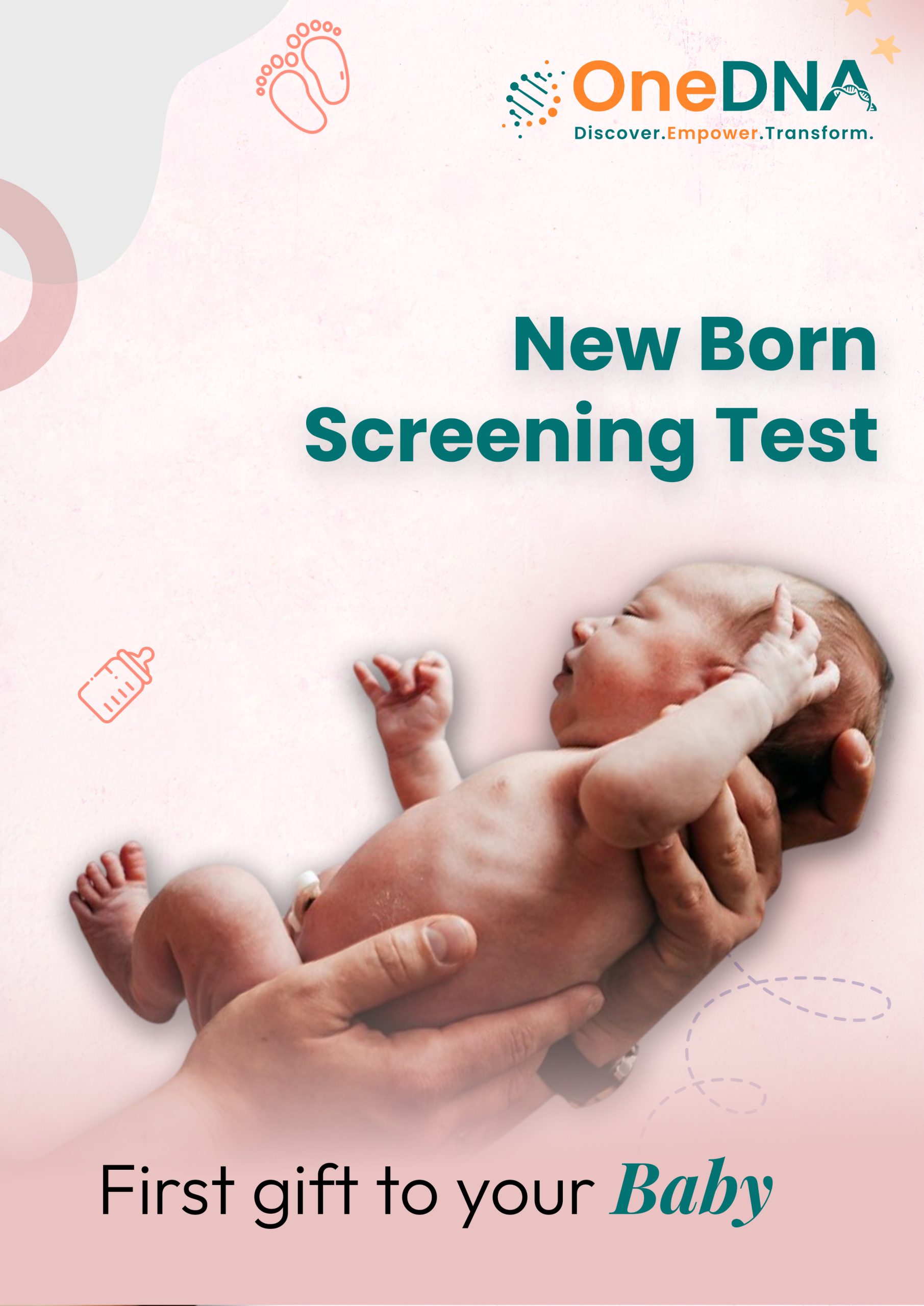
What is Newborn screening?

Newborn screening is a simple, safe heel-prick blood test performed within the first 24–72 hours after birth to detect serious but treatable congenital and metabolic disorders, often before any symptoms appear. The test uses a Dried Blood Spot (DBS) card collected via heel prick and is analysed using advanced technologies including ELISA, TMS, GC-MS, and LC-MSMS at ISO-certified laboratories.

What does it screen for?

  • Screens for a wide range of inherited metabolic and genetic disorders in newborns.
  • Includes thyroid issues, amino acid disorders, organic acidurias, and hemoglobinopathies.
  • Covers conditions like G6PD deficiency, cystic fibrosis, PKU, and thalassemia.
  • Uses advanced technologies like TMS, GC-MS, and LC-MS/MS for accurate detection.
  • Enables early diagnosis and timely treatment to prevent long-term complications.

Who should take this test?

  • All newborns: Recommended for every baby within 24–72 hours of birth, regardless of apparent health.
  • A family history of chromosomal or metabolic disorders.
  • Advanced maternal age (35+) at the time of delivery.
  • An abnormal finding on traditional ultrasound or previous prenatal tests, or a history of a previous anomalous or chromosomally abnormal pregnancy.

Connect with our expert

Why choose OneDNA

Comprehensive Coverage

Comprehensive testing across both molecular and cytogenetic platforms

Accredited Laboratories

NABL & CAP accredited lab

Support & Care

End-to-end support including genetic counselling and report guidance.

Early & Accurate

High accuracy with advanced technologies and stringent quality controls

Download our brochure

Download our brochure to learn more about Newborn screening

Frequently Asked Questions

Yes. The test is completely safe. It only involves a small heel prick to collect a few drops of blood on a special card. There is no risk to the baby.

A healthcare professional collects a few drops of blood from your baby’s heel on a special Dried Blood Spot (DBS) card. The sample is then analyzed in a certified laboratory using advanced technologies.

It does not prevent diseases, but it enables early detection and early treatment, which can prevent serious complications and improve long-term health outcomes.

Yes. Routine tests check current health status, while newborn screening looks for hidden genetic or metabolic conditions that may appear later in life.

No. It screens for a defined set of treatable conditions, especially metabolic and inherited disorders. It does not test for all possible genetic diseases.

Some Blogs from us

Sudden Cardiac Arrest: A Growing Health Crisis in India

Sudden cardiac arrest (SCA) is one of the most devastating cardiovascular emergencies. SCA happens when the electrical system of the heart malfunctions, resulting in deadly arrhythmias, as opposed to a heart attack, which is brought on by limited blood supply to the heart muscle.

Genetic Keys to Cracking Testicular Cancer

Testicular cancer is a highly treatable form of cancer that develops in the testicles, which are the male reproductive glands responsible for producing sperm and testosterone.

Our Companies

Screens for 90+ conditions

Get in touch

Have questions or need assistance? Get in touch with our team—we’re here to help.

Fill out the form below to get instant access to the product brochure.